

RESOURCES
Practical cloud and platform insights.
Browse InfraJump articles and published platform examples without changing their existing detail URLs.
Latest articles

Top 5 Underrated DevOps Tools
We all know and use such established tools as Jenkins, Docker, and Kubernetes. Yet, the expansive universe of DevOps is teeming with lesser-known gems that often operate in the shadows of their more renowned counterparts. The quest for efficiency and innovation leads us to explore tools that might not always hog the limelight but contribute significantly to streamlined workflows and enhanced productivity. So, what about the unsung heroes of the DevOps toolkit? Let’s look at the top 5 underrated DevOps tools that are quietly making waves and deserve a closer look for their unique contributions. In no particular order:

Will OpenTofu Replace Terraform?
On August 10th, 2023, HashiCorp announced a significant shift in licensing strategy, transitioning from the Mozilla Public License to the Business Source License (BUSL) for future releases, including Terraform starting from version 1.6. BUSL is a business license that allows for source code to be available but not classified as open-source, imposing limitations on commercial code use. This, as you probably remember, was REALLY BIG news. In response to this licensing shift, a new fork of Terraform version 1.5 emerged, wryly named OpenTofu (because it’s an Open TF). Joining The Linux Foundation on September 20th, 2023, the product is designed to be a drop-in replacement for legacy Terraform. Excitingly, OpenTofu made its stable debut on January 10th, 2024: https://opentofu.org/blog/opentofu-is-going-ga/

Jenkins Vulnerability: DevSecOps, CI/CD and Other Trendy Words
The recent vulnerability, CVE-2024-23897, has thrust Jenkins into the spotlight reigniting discussions about its role in the DevOps world. Jenkins still holds on to 44% of the market share and has more than 75,000 servers exposed to the internet. This prevalence in CI/CD pipelines means that vulnerabilities can disrupt workflows across countless projects and organizations. Furthermore, it prompts a reevaluation of dependency management and the security of third-party plugins, which are often the Achilles’ heel of otherwise secure systems.

OpenTofu is Growing Fast. Latest Update and Usage Stats You Should Know
Last year we asked a question if OpenTofu would replace Terraform. Spoiler alert: the answer was no but OpenTofu had an opportunity to capture a sizable market share. And they have been busy. According to their blogpost they had a massive increase of ~300% in registry traffic over the previous 6-7 months (time between major releases), with registry requests tripling to over 6 million per day. In 2024 and early 2025 OpenTofu had four significant updates – versions 1.6.0, 1.7.0, 1.8.0, and the latest 1.9.0 with improved user experience and capabilities.

Analyzing Internet Outage of June 12
Two weeks ago, on June 12, 2025, the world experienced a massive internet outage that lasted 2.5 hours. Among the affected services were Google Cloud, which disrupted hundreds of internal APIs (including IAM, Spanner), leading to failures in Google Workspace (Gmail, Calendar, Docs, Drive, Meet) and numerous cloud services. Cloudflare services Access, WARP, Workers KV were also impacted, as well as platforms like Spotify, Discord, Snapchat, Twitch, Replit, GitHub, and others. The outages affected millions of users because many popular platforms rely on cloud providers such as Google Cloud and Cloudflare. This event highlighted the vulnerability of the modern internet, which increasingly depends on a few key infrastructure giants.
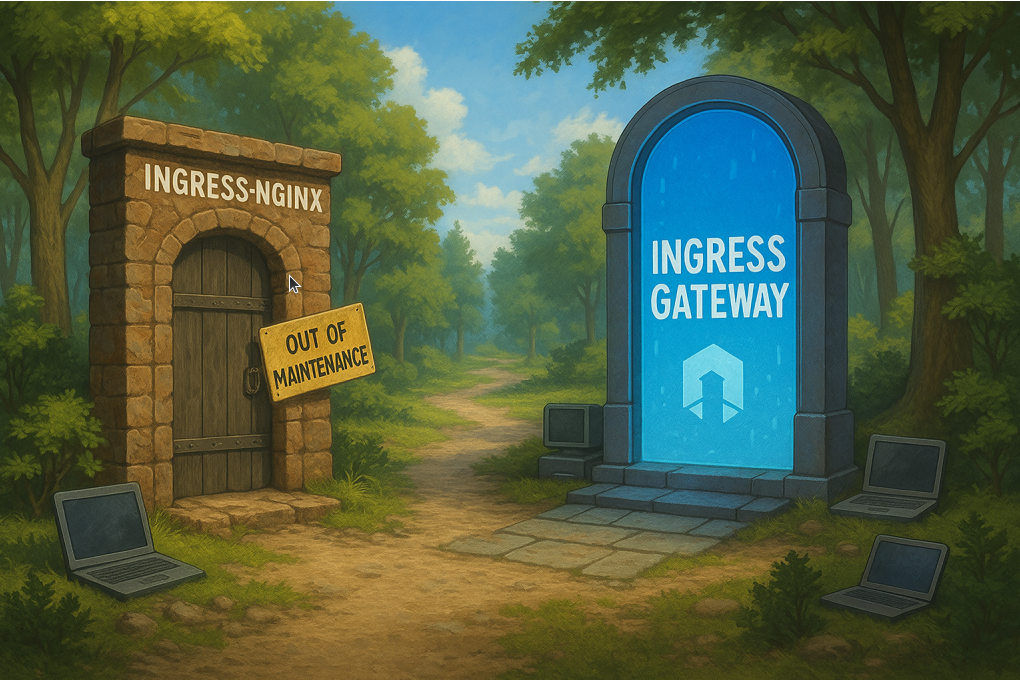
Kubernetes Announces Retirement of ingress-nginx
The Kubernetes team recently announced that the ingress-nginx project (one of the most widely used Kubernetes ingress controllers) is entering retirement and moving into maintenance-only mode: Kubernetes Post. The official post confirms that while critical security fixes will continue for now, the project is no longer taking new features and the community is clearly shifting toward the Gateway API as the long-term direction for Kubernetes traffic management. In short: nothing breaks today, but if you are running ingress-nginx in production, you should start thinking about your migration path before it becomes an urgent problem.